.png)

Bridging Loans

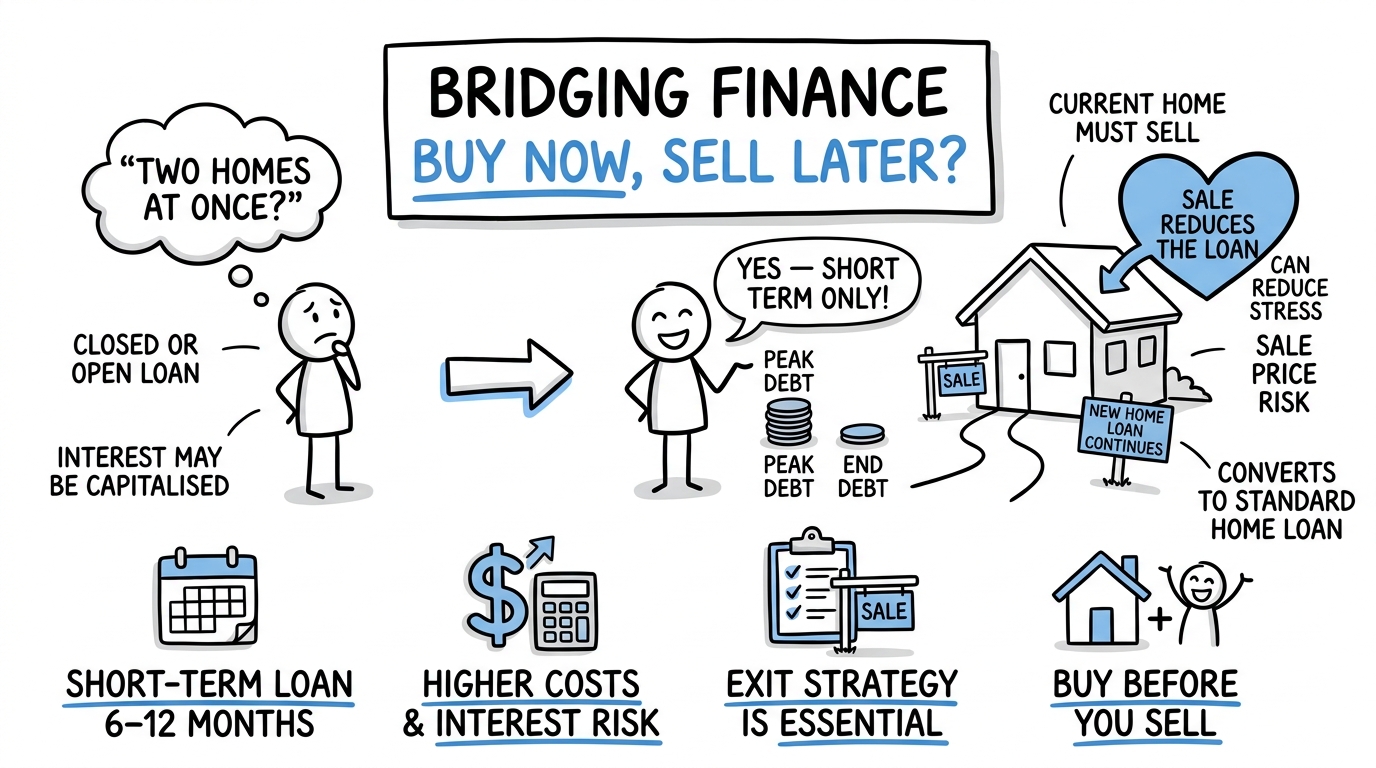
Bridging finance can be very useful in the right circumstances, but it also comes with real risks and higher short-term costs, especially if your current property takes longer to sell than expected.
How a bridging loan works
When you take out a bridging loan, you’re usually managing two properties at once (your current home and your new home) for a limited period called the bridging period.
The key idea: “Peak debt” vs “End debt”
- Peak debt: the maximum amount you owe during the overlap (often your existing mortgage balance plus what you need for the new purchase).
- End debt (ongoing balance): what’s left after your current home sells and the sale proceeds are used to reduce the debt. This remaining balance typically becomes your ongoing home loan on the new property.
What happens after the sale?
Once your existing property is sold:
- your old mortgage is paid out/discharged (if it hasn’t already been),
- the bridging facility ends, and
- the remaining loan balance is generally converted into a standard home loan (with the repayment type you choose/are approved for).
Types of bridging loans
Closed bridging loan
A closed bridging loan is based on a known sale date (for example, you’ve exchanged contracts and have a setsettlement date for your current property). This can be simpler for lenders because the exit strategy is clearer.
Open bridging loan
An open bridging loan doesn’t have a fixed sale date upfront—just a maximum term. Lenders commonly want stronger evidence that the property is on the market and that your plan to selli s realistic.
Common features you’ll see (varies by lender)
Bridging loans differ between lenders, but many share these features:
- Short term: commonly up to 6–12 months (often longer allowances when building, depending on lender policy).
- Interest-only during the bridging period: Some lenders allow interest-only repayments; in some cases interest may be capitalised (added to the balance) during the overlap.
- Variable rate pricing: bridging rates can be different to standard home loan rates, sometimes higher due to the short-term nature and higher temporary debt
- Equity/LVR limits: many lenders cap borrowing to a percentage of the combined value of both properties, meaning you typically need meaningful equity.
- Exit strategy required: usually the primary exit is selling your current home within the bridging time frame
- Possible restrictions: some products restrict features like redraw during the bridging term, and some property/entity types may not be accepted.
-
Why people use bridging finance
A bridging loan may help you
- Buy before you sell (so you can act quickly when the right home appears).
- Avoid renting or moving twice.
- Reduce pressure to accept a lower offer just to meet timing.
- Create flexibility to prepare and market your current home properly.
Costs to budget for (the “don’t get caught out” section)
Bridging finance can be convenient, but it can also getexpensive if the timeline blows out. Costs may include:
- Interest on a higher temporary debt level (your peak debt)
- Potentially higher interest rate than a standard loan, depending on the lender/product.
- Two property valuations (often one for each property).
- Loan establishment / variation / settlement fees.
- Legal and settlement cost.
- Break costs if you need to refinance out of a fixed-rate loan to access a bridging product.
-
Also remember the non-loan costs that can overlap:
- two sets of rates/insurance/utilities.
- moving, storage, cleaning, short-term accommodation (if needed).
Risks and downsides (and why the exit plan matters)
Bridging loans can put pressure on cash flow because you mayeffectively be carrying two properties at once.
Key risks include:
- Sale takes longer than expected: the longer the bridging period runs, the more interest can accrue.
- Sale price comes in lower than expected: you may end up with a bigger ongoing loan (or a shortfall to cover).
- Time limits: if you don’t sell within the agreed timeframe, the lender may apply tougher conditions (which can include higher pricing or requiring different repayments).
- Forced-sale risk: if the property remains unsold, the lender can take steps to recover their position—potentially reducing your control over timing and outcome.
Good planning can reduce these risks significantly, but it’simportant to go in with eyes open.
What lenders typically look for
While policies vary, lenders commonly assess:
- Equity position and overall loan-to-value ratio across both properties.
- Serviceability (your ability to manage repayments and living costs during the overlap).
- Clear exit strategy (usually evidence your current home is listed, under offer, or under contract—requirements vary).
- Property suitability (some properties or ownership structures may be outside policy).
Alternatives to bridging loans
Depending on your situation, you may be able to avoidbridging finance by:
- Selling first, buying later (rent short-term if needed).
- Negotiating a longer settlement on the purchase (buying contract).
- Using a “subject to sale” clause (where appropriate and accepted by the vendor; get legal advice).
- Considering a second mortgage (if suitable and available).
- Exploring private/non-bank short-term finance (often higher cost and stricter terms).
How we help
Our empanelled brokers work out whether bridging finance is suitable and, if it is,structure it to reduce risk. That includes:
- Peak debt and cash-flow check (so you know what the overlap looks like in real life.
- Lender selection based on policy, term, and price.
- Evidence and application packaging (income, liabilities, valuations, and sale plan).
- Contingency planning (buffers, timeframes, and what happens if the sale price or timing changes).
- Smooth conversion from bridging to your longer-term home loan after sale.

FAQ`s
Yes—this is exactly what bridging loans are designed for.The loan helps cover the timing gap so you can purchase now and repay/reducethe debt once your current property sells.
Sometimes. It depends on the lender and how the bridgingfacility is structured. Some setups require repayments on one loan during partof the process, while others require payments on both from day one. Interestmay also be capitalised during the bridging period in some cases.
Bridging loans are usually short-term—commonly up to 6to 12 months. Exact limits depend on the lender and whether you’re buyingan established property or building.
If your property doesn’t sell in time, you may need to:
1.request an extension (not always available
2.refinance to another product, and/or
3.move to different repayment terms or pricing. Inworst-case situations, the lender may take steps to recover the debt, which canreduce your control over the sale outcome.
You’re still responsible for repaying the loan. A lower saleprice can leave you with a higher ongoing loan balance (or ashortfall). Some lenders may allow a shortfall to be rolled into the ongoinghome loan if you still meet policy and serviceability.
They can be. Bridging loans are short-term and involvehigher temporary debt, so pricing is often different to standard home loans.The exact rate depends on the lender, your equity, and the structure.
Common costs include:
1.Valuation fees (often for both properties)
2.Legal/settlement costs,
3.Loan establishment or variation fees.
4.Potential break costs if refinancing out of a fixed rate.
Typically, yes—you usually need a solid equity position tokeep the overall lending within policy. Some lenders have explicit limits (forexample, maximum borrowing as a percentage of combined property value).
Often,lenders want a clear exit strategy. Some accept proof the home is listed withan agent; others may prefer (or require) a signed contract or unconditionalsale. It varies by lender.
Insome cases, yes—bridging can be used to cover short gaps when settlement datesdon’t line up. Whether it’s available and cost-effective depends on lenderpolicy and fees.
Usually yes. Many lenders allow early repayment, and paying it down sooner can reduceinterest costs. Always check whether any fees apply in your specific product.
Some lenders will consider bridging in build scenarios,often with a longer allowed timeframe. Construction policies vary a lot, sothis needs careful lender selection.
Possibly. Some lenders mainly offer bridging finance toexisting customers, while others consider new customers too. If you need torefinance to access bridging, it’s important to factor in time, costs, and anyfixed-rate break costs.
Commonly:
- income documents (payslips, tax returns where relevant)
- details of existing debts and expenses,
- property information and valuations,
- your sale plan/exit strategy for the current home.